
Forget the Egg Hunt! These Are the Best Places to Spend Easter Weekend in Europe
There is nothing wrong with a long weekend on the sofa with a tin of chocolate and a good box set. We’re not judging. But if a small part of you is wondering whether Easter weekend could be something more, something that involves actually going somewhere extraordinary, then you’ve come to the right place.
Europe at Easter is genuinely, quietly magical. Crowds haven’t fully arrived yet. Spring is just breaking. And across the continent, from the sun-drenched streets of Andalusia to the cobbled squares of the Balkans, Easter is celebrated with a depth of tradition, drama, and community warmth that makes Christmas look understated.
Here are four of the best Easter destinations in Europe, all of them places we know and love, and none of them the obvious choice.
1. Seville, Spain: Semana Santa

When: Palm Sunday to Easter Sunday (29 March – 5 April 2026) Why it’s special: The most spectacular Easter celebration in the Western world.
If you have never been to Seville for Semana Santa, it belongs on your list immediately. Not eventually. Immediately.
Huge statues representing various images from the Passion of Jesus Christ take to the streets in processions that last up to 12 hours. Schools shut, workplaces close, and the whole city bands together in appreciation of the spectacle. This has been happening, in more or less its current form, since the 16th century and it shows not the slightest sign of fading.
Over 50,000 cofradía members don traditional robes and solemnly traverse the city in over 116 processions from Palm Sunday to Easter morning. A cappella saetas, hauntingly beautiful religious songs, accompany some processions, brass bands others, while some are observed in complete silence.
The climax comes on the night of Holy Thursday into Good Friday, known as La Madrugá. La Madrugá is the most emotionally intense night of Semana Santa. Six major brotherhoods wind their way through Seville’s historic centre with enormous paso floats weighing up to a tonne, illuminated only by candlelight and accompanied by the sound of drums and saetas sung from the balconies above. The city turns off its streetlights as the oldest and most revered procession passes through in near-total darkness. Adults cry. Seasoned travellers are left speechless.
The city smells of orange blossom and incense and candle wax. Brass bands’ solemn marches echo off the walls of the old town. For a non-religious visitor, it remains one of the most viscerally moving cultural experiences in Europe.
Practical tips: Book accommodation months in advance – the city fills completely. Expect some bars and restaurants to close during the busiest nights so that locals can participate. Dress respectfully, particularly near the processions, and arrive early to claim a good spot. The seat sections closest to the cathedral require tickets, but standing along any of the routes is free and gives a perfectly good view.
2. Corfu, Greece: Orthodox Easter

When: Greek Orthodox Easter Sunday, 12 April 2026 Why it’s special: Europe’s most exuberant Easter celebration, with unique traditions unlike anything else in Greece
Greek Orthodox Easter is the most important holiday in the Greek calendar, and no part of Greece celebrates it quite like Corfu.
Easter in Corfu is a unique blend of Catholic and Orthodox Christian religious traditions, influenced by Venetian customs and local cultural elements. Since the period of Venetian rule, Easter has been jointly celebrated by both the Orthodox and Catholic Churches. The result is a celebration that is at once deeply devout and spectacularly, joyously alive.
The week builds through solemn Good Friday processions, there are 33 epitaphs, symbolising the 33 years of Christ’s life, each accompanied by a choir, philharmonic band, large candles, and towering banners, before Holy Saturday delivers one of the most gloriously eccentric traditions in all of Europe.
At around 11am, the town square fills with people who gather to witness the famous pot-throwing ceremony. Locals throw large ceramic pots filled with water from their balconies onto the streets below, accompanied by loud music and cheering. The noise is tremendous. The smashed pottery is everywhere. And it is absolutely brilliant.
At midnight, Corfu lights up as the Holy Flame is shared among worshippers. The Hymn of Christ’s Resurrection is sung, and thousands of candles illuminate the night sky. The night ends with a grand fireworks display, marking the most joyful moment of Easter in Corfu.
Easter Sunday brings lamb on the spit, red eggs, family gatherings, and a sense of communal joy that spills into every café and square on the island. The celebrations continue for several more days, with parades and processions, and a sense of joy and celebration that permeates the entire island.
Note that Greek Orthodox Easter falls on a different date to Western Easter in 2026, 12 April rather than 5 April, so you can, in theory, do both Seville and Corfu in the same season.
Practical tips: Corfu Town is the place to be, particularly around the Liston, the Spianada, and the old town. Book accommodation well in advance. Stand clear of the balconies on Holy Saturday morning unless you are happy to get wet.
3. Sarajevo, Bosnia & Herzegovina: Where Four Faiths Share the Season

When: Catholic Easter 5 April 2026; Orthodox Easter 12 April 2026 Why it’s special: The only city in Europe where you can walk from a mosque to a synagogue to a Catholic cathedral to an Orthodox church in under ten minutes
Sarajevo at Easter is something entirely its own. The city is a timeless tapestry where East meets West, observing both Catholic and Orthodox Easter dates, often creating a prolonged season of reflection and celebration. The cobblestone streets echo with the chatter of café patrons, the call to prayer, and the solemn, beautiful chants of Holy Week services. It is a season of contrasts: the solemnity of a candlelit procession and the joyous clinking of glasses in a kafana.
Bosnia is something in between. There are Catholics, Orthodox, Muslims and Jews. All holidays are celebrated according to local traditions. Another name for Sarajevo is European Jerusalem, within a radius of 600 metres you can see the religious buildings of all four major monotheistic world religions.
The most numerous ethnic group in the country are the Muslim Bosniaks, who naturally do not observe a Christian holiday. However, thanks to a long tradition of multi-ethnic coexistence, many Bosniaks join the Easter family feasts of their Christian friends and neighbours. There is something genuinely moving about seeing this in action, a reminder that shared humanity has always been more powerful than division, in a city that knows the full weight of that truth.
The Baščaršija old bazaar, one of the most atmospheric corners of Europe, is at its finest in spring – warm enough to sit outside, but not yet overrun with summer tourists. The smells of freshly ground coffee, grilled meat, and the Ottoman-era coppersmiths at work form a backdrop to the Easter season that you will not find anywhere else on the continent.
Beyond the city, the hills of Bosnia are still snowcapped in early April, the rivers are running high and glacially clear, and the countryside is erupting into green. It is, in short, an extraordinary place to be.
Practical tips: Sarajevo is compact and very walkable. Book a guesthouse in or near the old town rather than a chain hotel – the city’s independently run accommodation is excellent and puts you in the heart of everything. Day trips to Mostar and the surrounding countryside are easily arranged.
4. Transylvania, Romania: Orthodox Easter in the Villages

When: Orthodox Easter Sunday, 12 April 2026 Why it’s special: Ancient traditions, extraordinary landscapes, and an Easter experience that feels completely unchanged by time
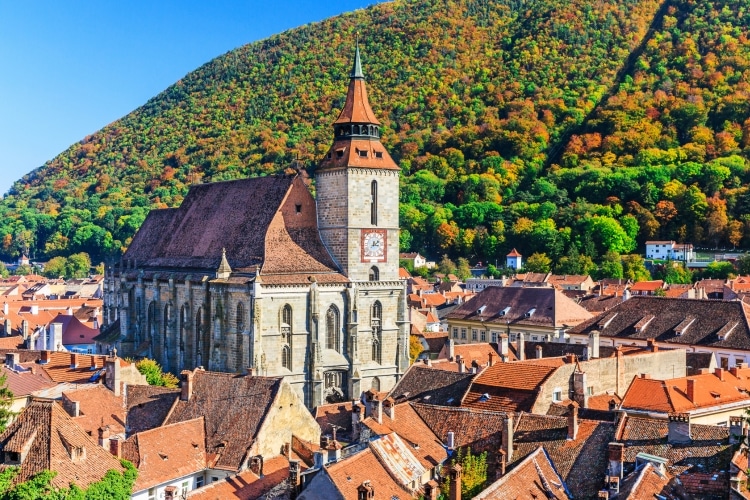
Transylvania at Easter is one of Europe’s best-kept secrets. While the rest of the world has heard of Dracula and the medieval castles and yes, they’re genuinely spectacular – the Easter traditions of the Transylvanian countryside go largely unnoticed by outside visitors, which makes them all the more precious.
The celebrations begin with Palm Sunday, known locally as Duminica Floriilor, opening Holy Week – a time of spiritual preparation. Many Romanians observe Lent in the weeks leading up to Easter, abstaining from meat and dairy, making the eventual Easter meal both a reward and a spiritual milestone.
Transylvania has been inhabited over time by different communities including Romanians, Hungarians, Saxons, and other minorities, and their diversity has influenced local traditions and customs. The result is a fascinatingly layered Easter, where Orthodox Romanian traditions sit alongside Hungarian Catholic customs and the remnants of Saxon heritage – all within a few miles of each other.
In Transylvania, people strictly observe Lent and prepare the household: land is ploughed and sown, houses are whitewashed and cleaned, new clothes are made. Easter Sunday brings the family to the table for a feast centred on roast lamb, intricately hand-painted eggs, cozonac (a rich, sweet Easter bread), and the ancient custom of egg-tapping – family members tap their painted eggs together, competing to see whose shell is strongest, exchanging the traditional greeting: “Hristos a înviat!” (Christ has risen!) and the response: “Adevărat a înviat!” (Truly, He has risen!)
In Transylvania, young men go from house to house on Easter Monday sprinkling perfume on girls in a playful ritual meant to bring luck and beauty throughout the year. It’s the kind of tradition that makes you realise how much richness there is in the parts of Europe that most tourists simply never reach.
Pair an Easter stay with visits to the medieval walled city of Sighișoara, the fortified churches of the Saxon villages, or the extraordinary painted monasteries of nearby Bucovina and you have one of the finest Easter breaks imaginable.
Practical tips: Stay in one of the beautifully restored traditional guesthouses in the villages rather than in a larger town, Easter in Transylvania is a rural experience at heart. The villages around Sibiu, Sighișoara, and the Székely Land are particularly rewarding.
Easter 2026: When Are the Dates?
A quick note for those planning ahead:
Western/Catholic Easter: Sunday 5 April 2026 Greek/Serbian Orthodox Easter: Sunday 12 April 2026
This means that in 2026, the two Easters fall a week apart – giving the well-organised traveller the genuinely wonderful option of experiencing two completely different Easter traditions in one extended spring break.
Ready to Make Easter Unforgettable?

These are just four of the destinations across Europe and beyond where we love to take travellers at Easter. Whether you’re drawn to the theatrical grandeur of Seville, the joyous chaos of Corfu’s pot-throwing, the timeless village traditions of Transylvania, or the extraordinary cultural tapestry of Sarajevo, we can help you put together a trip that goes far beyond a standard long weekend break.
Get in touch with the Untravelled Paths team and let’s start planning your Easter adventure. We know these places personally, we know the best places to stay, and we know how to make sure you’re in exactly the right spot at exactly the right moment.
Because Easter only comes once a year and some years it deserves better than the sofa!
Written by James Chisnall